Afrey Nano 100
Portable battery packs are one of those tech accessories that don’t usually get the spotlight. They’re not flashy, they don’t spark excitement like a new phone or laptop, and yet—when you’re on a long journey and your battery warning flashes red—they’re the hero of the moment.
I’ve tested quite a few power banks over the years, and the Afrey Nano 100 is one of the more practical ones I’ve come across recently. It makes some bold claims: charging your phone five times, your iPad twice, and even giving your MacBook a decent top-up, all while staying small enough to slip into a shoulder bag or backpack and under the airline safety limit. Let’s break down what it actually delivers.
The Numbers That Matter
On paper, the Nano 100 looks huge: 31,000mAh. That figure is measured at the cell’s native voltage of 3.2V. Once you account for voltage conversion (charging a MacBook needs ~20V), the realistic usable capacity is about 4,400mAh at 20V, which equals roughly 88Wh of energy.
If that sounds like a big drop, don’t worry. It’s the same energy being measured at different points in the process. The Nano 100 runs at about 90% efficiency, which is very solid for this category.
Translated into real-world use:
iPhone 16 Pro Max → about five full charges
iPad Pro 13-inch → roughly two full charges
MacBook Air → around one and a half charges
That’s respectable coverage for a pack of this size.
Size, Weight, and Design
The Nano 100 weighs just over 1kg. It’s not featherlight, but considering what it delivers, the weight is reasonable. It’s compact enough to live in a backpack or travel bag without feeling like a brick.
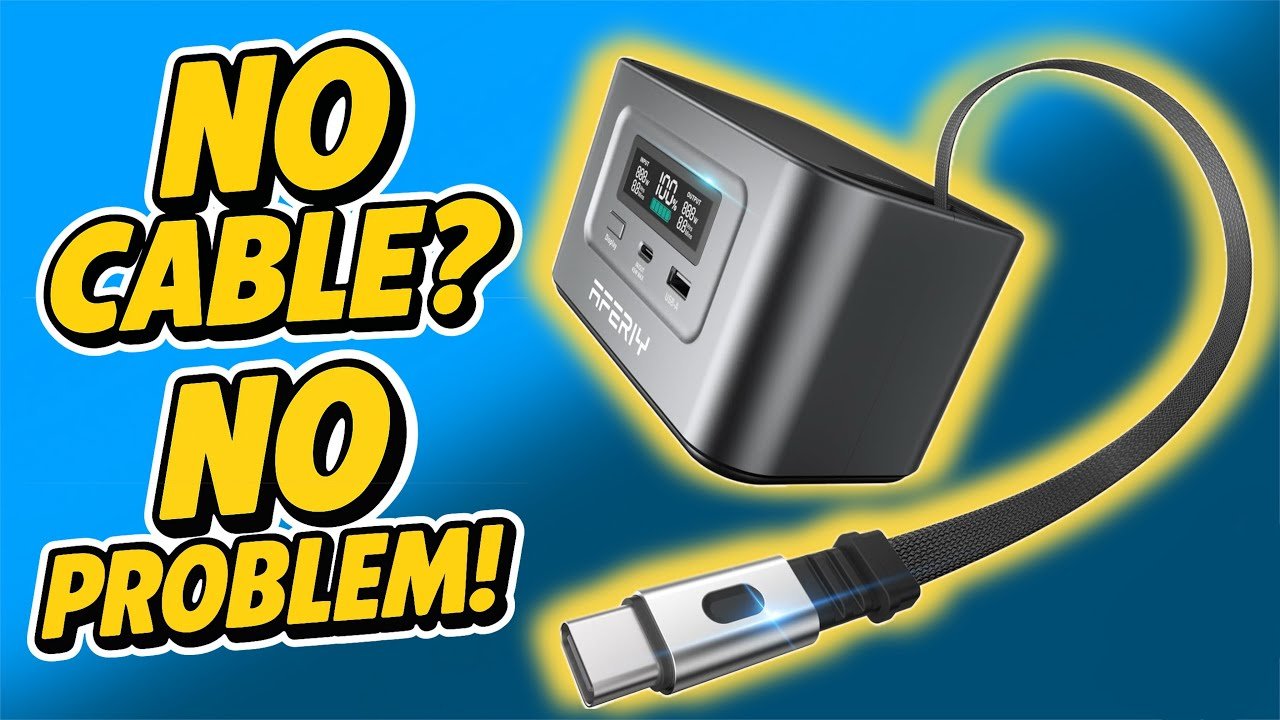
It comes with a retractable 100W USB-C cable built directly into the body. This is one of my favourite features. It means you’ll never be caught rummaging for a spare cable at the bottom of your bag when your laptop is on 2%.
That said, retractable cables are always a risk. If the mechanism fails, you lose one of the power bank’s key ports. The good news is that this one feels solid. The connector ends are reinforced, and the tension mechanism feels strong enough for daily use.
Beyond the built-in cable, you get an additional USB-C port and a USB-A port, so you can charge up to three devices simultaneously. Handy for when your phone, tablet, and headphones all decide to die at once.
The finish is matte grey. It resists fingerprints well, which I appreciate. But design-wise, it’s fairly plain—more “utilitarian grey box” than “eye-catching gadget.” This isn’t a power bank you’ll pull out to impress anyone. It’s here to do a job.
Display and Usability
One thing that stands out is the built-in display. Most power banks stick you with a vague battery percentage or a few LED dots. The Nano 100 goes further, showing you voltage, wattage, and other details. If you like knowing exactly what’s going in and out, this is a nice touch.
The interface is clean and readable. You can see at a glance how much juice you’ve got left and whether your device is pulling the expected charge.
Battery Chemistry and Longevity
The Nano 100 uses lithium iron phosphate (LiFePO₄) cells. This is important. Most consumer battery packs use standard lithium-ion, which typically last around 500 cycles before capacity noticeably degrades. LiFePO₄ cells are rated for over 3,000 cycles, making them significantly longer-lasting.
For context: charging and discharging once per day would still give you over eight years of use. In practice, most people won’t be cycling it anywhere near that often, so the pack should last you a long time.
And because it’s rated at 99Wh, it comes in just under the 100Wh limit for air travel, making it flight-friendly for most airlines. That’s a sweet spot—maximum portable power without breaking airline rules.
Solar Charging
Afrey includes an adapter that lets you connect the Nano 100 to a solar panel. If you’re into camping or spend a lot of time outdoors, this opens up a renewable charging option. It’s not something I’ll use personally, but it’s a thoughtful addition for certain use cases.
Price and Value
At £69, the Nano 100 hits a very attractive price point. You’re getting:
88Wh of usable power
100W built-in retractable USB-C cable
Additional USB-C and USB-A ports
Detailed display
LiFePO₄ cells rated for years of use
Airline-approved size
It’s not the cheapest power bank out there, but when you factor in the cycle life and the inclusion of a high-wattage retractable cable, it feels like good value.
Downsides
No device is perfect. A few points to note:
Weight: At just over 1kg, it’s not pocket-friendly. This is a bag-carry item.
Looks: Functional but uninspired. If you like sleek design, you’ll find this dull.
Retractable cable risk: Built-in convenience is great, but if it ever fails, you lose a port.
That said, none of these are deal-breakers given the price and feature set.
Final Thoughts
The Afrey Nano 100 isn’t trying to wow you with design. It’s not going to win any style awards, but it delivers where it counts: usable capacity, practical features, and long-term reliability.
If you’re a commuter, traveller, or just someone who doesn’t want to be caught short with a flat battery, it ticks a lot of boxes. The retractable cable is genuinely useful, the screen gives you real information, and the LiFePO₄ cells make it a pack that should last for years.
For £69, it’s hard to argue with that. If you’re after a reliable, no-nonsense battery pack that just gets the job done, the Afrey Nano 100 is worth a look.
Affiliate Link: Find the Afrey Nano 100 on Amazon
*This video was originally uploaded to my YouTube channel on the 12th July 2025 - LINK
Please support my work and enable me to keep writing content like this by tapping here: BuyMeACoffee